




A trainer books a 9am consult, a board-and-train drop-off at 10, then drives across town for a private lesson at noon. It looks full on the calendar. It doesn’t feel full to the dog getting rushed through session six of the day, or to the trainer running on fumes by 4pm. Scaling a pet business isn’t just adding more bookings, it’s adding more bookings without breaking the thing that made clients trust you in the first place: the quality of attention every dog gets.
For boarding facilities, training programs, and grooming teams, growth and burnout are two sides of the same calendar. The businesses that scale well are the ones that decided, on purpose, how much any one person or space can safely hold, and then built their booking system to enforce it.

Why Capacity Planning Carries Extra Weight in Pet Care
A trainer’s attention is a finite resource, and dog behavior work draws on it hard. A groomer’s table wears down with every large dog lifted onto it. A boarding kennel has a hard ceiling on how many dogs can be safely supervised at once. Unlike a lot of service businesses, you can’t just “squeeze in one more” without a real, physical consequence: a rushed session, a missed cue, an exhausted staff member handling a nervous dog on their tenth client of the day.
That’s why the businesses growing fastest in this space aren’t the ones saying yes to everything. They’re the ones who decided in advance what their real capacity is, per trainer, per kennel run, per grooming table, and let their booking system be the one that says no, so no one on staff has to be the bad guy.
What Pet Pros Are Saying
We asked pet care professionals in PocketSuite’s Pro Insight Survey how they manage their calendar to protect their team’s time, and whether they use buffers or capacity limits to avoid burnout. Here’s what three trainers, running very different setups, had to say.
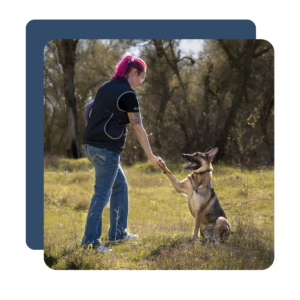
Terra Ruiz, Wholistic Canine
“Here’s how it works for me: I set each team member’s actual working hours for each service in the system, so when clients book themselves online, they can only choose from those allotted times. Nobody can book my trainers outside the hours they’ve committed to. And I love that it checks with you to confirm the appointment is okay before it’s locked in — so we get the convenience of self-booking without losing control of our time. Managing my calendar has honestly never been easier. ”

Georgette Lombardo, Pawsitive Training ABQ
“I set all the client appointments myself. They cannot self-book. I tried self-booking for discovery sessions only over seven years ago, and it was a disaster. I let my employees set their own schedule. It helps them to have agency. My system for staff capacity ensures that employees don’t book more than 3 training sessions per day. And, if they have 3 in one day, I make sure it doesn’t happen more than once a week. If an employee is booked with clients, I rotate new clients to another employee.”

Heather Chanelle Mazahri, Z Dog Training Academy
“Making sure to put proper amount of them in between appointments. On buffers specifically: Yes”
Building Your Own Capacity Rules
- Set working hours per staff member, per service. A trainer, groomer, or handler should only be bookable during the hours they’ve actually agreed to work.
- Cap the daily load, not just the calendar. Georgette and Terra both cap around three sessions a day, because behavior work realistically only allows so much focused attention.
- Build in real buffers, not token ones. For mobile teams, that buffer has to cover drive time and notes, not just a five-minute cushion between back-to-back bookings.
- Let the system hold the line. A policy your team has to enforce in the moment gets broken under pressure. A policy your booking system enforces automatically doesn’t.
How PocketSuite Supports Pet Business Capacity
- Per-staff, per-service working hours. Set exactly when each trainer, groomer, or handler is bookable, so clients can only self-book into real availability.
- Built-in scheduling buffers. Add buffer time between appointments automatically, so drive time, cleanup, and reset time are protected on every booking.
- Staff rotation and team scheduling. Rotate new clients across your team instead of overloading one trainer, and see everyone’s real capacity at a glance.
- Smart Reports on utilization. See how full each trainer’s or kennel’s schedule really is, so you know when it’s time to hire before you’re already overbooked.
A Quick Checklist for Scaling Without Burnout
- Set real working hours for every trainer, groomer, and handler, and keep clients from booking outside them.
- Decide your daily client cap per staff member, based on the mental and physical demands of the work.
- Add buffers that reflect real drive time, cleanup, or reset time, not a token few minutes.
- Rotate new clients across staff instead of stacking everyone onto your busiest trainer.
- Check your utilization reports monthly to catch overload before it becomes burnout.
Frequently Asked Questions
How many clients should a dog trainer or groomer see in a day? There’s no universal number, it depends on the intensity of the work. Terra Ruiz caps her trainers at about three clients a day, and Georgette Lombardo caps hers at three sessions too, no more than once a week, because behavior work demands real mental energy per session.
What’s the difference between a buffer and a working hour limit? Working hours control when a staff member can be booked at all. Buffers control the space between bookings within those hours, protecting drive time, cleanup, or a mental reset before the next client.
How do I enforce capacity limits without constantly saying no to clients myself? Build the limit into your booking system instead of your own willpower, so the system says no on your behalf, the way Terra Ruiz’s setup does.
Ready to Protect Your Pack (and Your Team)?
Scaling a pet business shouldn’t mean stretching every trainer, groomer, or kennel run past what it can safely hold. PocketSuite’s scheduling tools let you set real hours, real buffers, and real caps, then let the system do the enforcing.
Start a free trial at pocketsuite.io and build a calendar that protects your team as it grows.