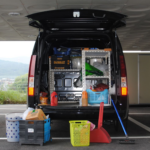




Adding a second van feels like the obvious next step once the first one is booked solid. But a cleaning or detailing business scales through routes, not just revenue, and a poorly planned second unit can quietly cost more in drive time, missed windows, and burned-out techs than it earns in new bookings.
The businesses that grow their fleet well do the math on rest time and route density before they do the math on a new hire.

Why Capacity Planning Carries Extra Weight in Home Services
Every job in cleaning and detailing comes with hidden time on either side of it: drive time between addresses, loading and unloading equipment, and the physical recovery a technician needs between jobs that are, quite literally, hard on the body.
Route density and fleet wear both compound fast once you’re managing more than one crew. A schedule that worked fine for one van can fall apart the moment a second one is added without a real plan for rest time and travel between stops.
What Home Services Pros Are Saying
We asked cleaning and home service professionals in PocketSuite’s Pro Insight Survey how they manage their calendar to protect their team’s time, and whether they use a system for managing staff capacity. Andreene Beharie, owner of A Dream Cleaning Svc INC, was the only cleaning and detailing business in this survey round, so hers is the one perspective we have, straight from the field.

Andreene Beharie, A Dream Cleaning Svc INC
“Accounting for rest time in between jobs On buffers specifically: Yes”
The Math Behind Adding a Second Unit
- Rest time isn’t optional, it’s part of the route. Build real recovery time between jobs into every tech’s schedule.
- Route density beats raw job count. A second van filled with jobs scattered across town can be less profitable than a tighter route on one van.
- Communicate proactively, don’t just react, the way Andreene Beharie treats communication and flexibility as non-negotiable.
- Plan fleet maintenance like a recurring job.
How PocketSuite Supports Home Services Business Capacity
- Built-in scheduling buffers. Automatically add travel and rest time between jobs.
- Multi-crew scheduling. Manage multiple vans or teams from one calendar as you scale.
- Automated client communication. Keep clients updated automatically on arrival windows and any delays.
- Smart Reports on job density and utilization. See how tightly booked each crew’s route actually is.
A Quick Checklist for Scaling Without Burnout
- Build rest time between jobs into the schedule for every crew.
- Before adding a second van, map out route density in the area it would serve.
- Set up automated arrival and delay updates.
- Put fleet maintenance on a recurring schedule.
- Review utilization by crew once you’re running more than one van.
Frequently Asked Questions
How much rest time should I build in between jobs? There’s no single right number, but the principle Andreene Beharie follows is the important part: rest time between jobs is a planned part of the route, not an afterthought.
How do I know if I’m ready to add a second van? Look at route density before revenue. A second van pays off fastest when it can serve a route as tight as your first one.
What’s the biggest capacity risk when scaling a fleet? Treating a second van as pure upside without planning for the added maintenance, rest time, and route coordination it requires.
Ready to Do the Math on Your Next Van?
Growing a cleaning or detailing fleet works best when rest time, route density, and communication are built into the schedule from the start.
Start a free trial at pocketsuite.io and build a fleet schedule that scales without burning out your crew.